
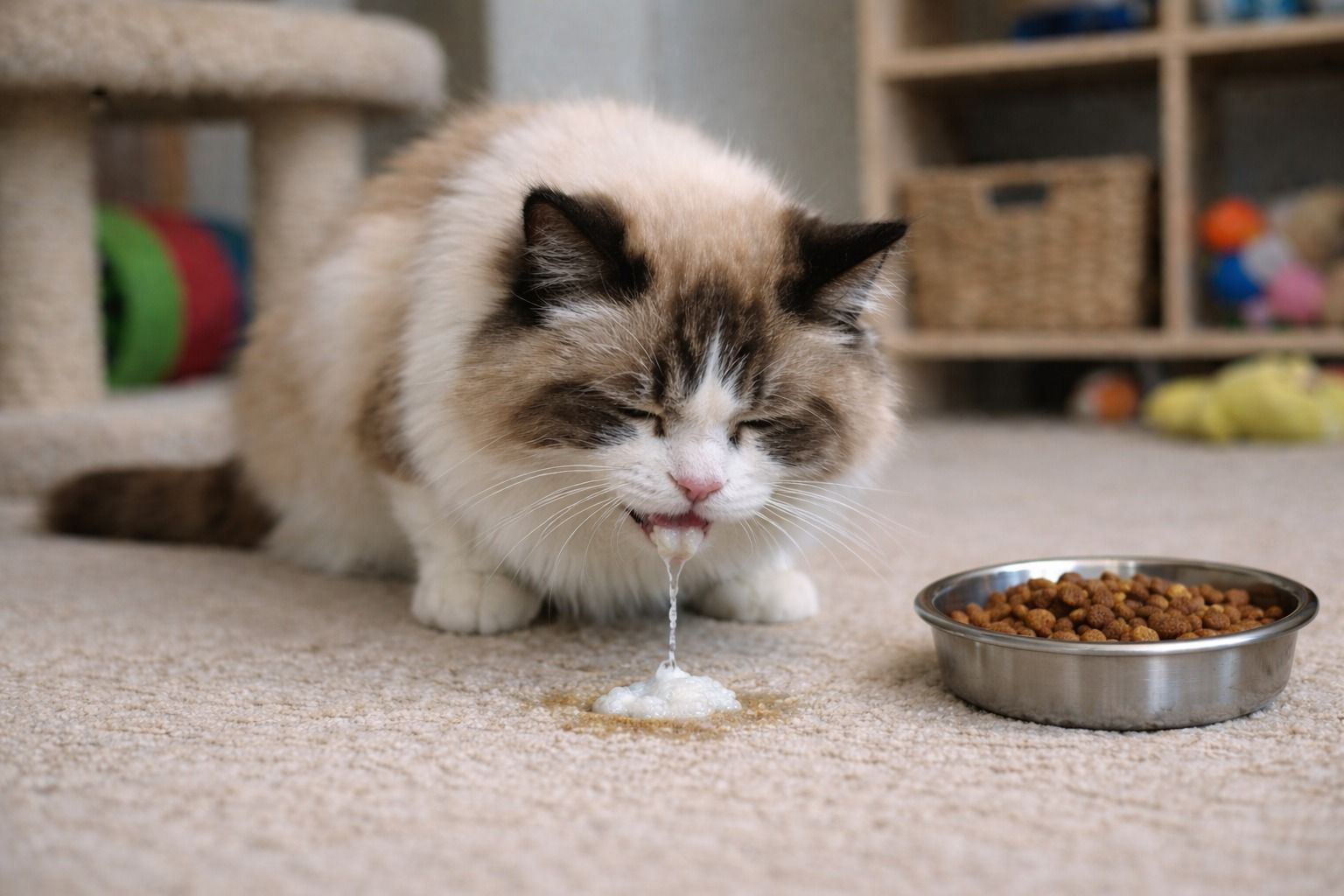
Why Is My Cat Vomiting White Foam and Not Eating? Causes & Remedies
When your feline all at once stops consuming and begins vomiting white foam, it could be alarming for any puppy discern. While some reasons are mild, others call for instant attention. The maximum not unusual motives for cat vomiting white foam and not eating encompass indigestion, hairballs, acid buildup, or early symptoms of infection. Understanding these triggers allows you to reply lightly and efficiently.
At FurrBaby, we assist you in such demanding situations through expert online vet consultations, network discussions, and precious resources designed to guide you with clarity and self assurance. Whether you want brief recommendations or deeper insights, FurrBaby ensures your cat gets the right care at the right time.
Indigestion and Empty Stomach
Cats regularly vomit white foam whilst their stomach has been empty for an prolonged duration, leading to infection from excess stomach acid. When a cat vomiting white foam and not eating occurs at the same time, indigestion or hunger-associated nausea is one of the most common reasons. Cats that skip food, eat past due, or have moderate digestive pain may additionally react through expelling white frothy fluid. This isn’t usually serious, but it must be monitored intently. Offering small, common meals can save you the stomach from becoming overly acidic, even as hydrating broths or plain warm water can assist soothe infection. If the pattern keeps or your cat refuses food for greater than 24 hours, a vet consultation is strongly endorsed.
Hairballs Blocking Digestion
Hairballs often cause an episode of a cat vomiting white foam and not eating, especially in cats that groom often. As unfastened fur collects within the stomach, it may shape dense clumps that grow to be hard to bypass. When the blockage irritates the digestive tract, the stomach produces extra acid, resulting in white foam vomiting and decreased appetite. Regular brushing, fiber-rich meals, and safe hairball-control gels help prevent buildup. Monitoring your cat for the duration of shedding seasons is specifically critical. If the hairball does not pass or vomiting continues beyond 48 hours, a veterinarian needs to evaluate the situation to rule out a more critical obstruction.
Gastritis or Mild Inflammation
Digestive inflammation, or gastritis, can occur due to surprising weight-reduction plan changes, spoiled meals, or consumption of grass or overseas objects. This regularly results in cats vomiting white foam and not eating for brief durations. Cats with gastritis may also appear tired, drink less, or lick their lips regularly. Offering a bland diet like boiled hen or moist meals mixed with water helps ease inflammation. If signs and symptoms final extra than a day, a veterinary assessment is vital to rule out infections.
Acid Reflux or Bilious Vomiting
Acid buildup within the belly can also cause cats to vomit white or yellowish foam, especially in the morning. When this acid irritates the stomach lining, appetite obviously drops. If you observe a cat vomiting white foam and not eating in the course of early hours, acid reflux disorder may be the reason. Feeding small meals earlier than bedtime or supplying light snacks can stabilize acid stages. However, chronic reflux can also require antacid medicinal drugs prescribed with the aid of a vet.
Stress, Anxiety, or Environmental Changes
Cats are highly sensitive to emotional and environmental shifts. Moving houses, loud noises, new pets, or ordinary changes can cause cats vomiting white foam and not ingesting due to pressure. Anxiety disrupts digestion, reduces appetite, and triggers vomiting episodes. Creating a calm ecosystem, imparting feeding privacy, and keeping stable routines typically enables. Stress-associated vomiting should improve within 24 to 48 hours; otherwise, behaviour-focused veterinary assistance is advised.
Parasites, Infections, or Underlying Illness
While a few causes are mild, cats vomiting white foam and no longer consuming may also from time to time indicate deeper health issues. Parasites, early kidney problems, infections, and metabolic imbalances can affect the digestive system. These conditions frequently start subtly before displaying stronger signs and symptoms. Regular vet test-ups, stool checks, and early medical care are crucial for timely detection. Never ignore repeated episodes or refusal to devour for greater than 24 hours, especially in kittens or senior cats.
Conclusion
Cats may also vomit foam and refuse meals for numerous motives - starting from hairballs to digestion problems to stress. While a few cases remedy with simple care, extended signs have to now not be neglected. Monitor hydration, behaviour, and frequency of vomiting carefully. At FurrBaby, we help cat dad and mom navigate such conditions easily through professional on-line vet consultations, network steering, and depended on care sources. Whether you want brief reassurance or an entire guide, FurrBaby guarantees your puppy receives dependable, timely, and compassionate care every step of the way.
FAQs
1. Why is my cat vomiting foam and refusing food?
Common reasons encompass indigestion, hairballs, acid reflux, or moderate belly inflammation. Persistent refusal to consume calls for vet attention.
2. How long can a cat move without eating after vomiting white foam?
Cats have to never cross without meals for more than 24 hours. Beyond that, there's a threat of liver problems like hepatic lipidosis.
3. Should I feed my cat after vomiting white foam?
Offer small, bland food after a brief rest period. If your cat vomits again or nevertheless refuses food, consult a veterinarian right away.
4. Can pressure motive my cat to vomit white foam and stop eating?
Yes. Stress from recurring changes, new environments, or loud noises can trigger vomiting and urge for food loss. A calm, solid surroundings commonly facilitates signs and symptoms.
5. When should I fear about my cat vomiting white foam and not ingesting it?
If your cat refuses food for greater than 24 hours, vomits time and again, or shows lethargy or dehydration, seek immediate veterinary care to rule out extreme conditions.